
Industrial Flex Space Roofing in Detroit, MI
Multi-tenant low-slope roofs where penetrations multiply every lease cycle, HVAC loads vary by bay, and vacant suites quietly leak.
The penetration count is what makes a flex roof hard
What separates an industrial flex roof from a single-user warehouse is that it never stops changing. One building might hold a light-manufacturing shop, a distribution tenant, a tech company's lab, and a service contractor across bay subdivisions, and those uses shift with every lease cycle. Each tenant improvement adds rooftop units, cuts new penetrations for electrical and HVAC runs, and sets equipment that was never in the original loading plan. The membrane has to perform across all of that churn, so we start every flex project with a penetration inventory survey, not because anyone cut corners but because flex roofs accumulate years of undocumented tenant-driven modifications.
Detroit's commercial corridors are full of exactly this stock. The Russell Industrial Center near the North End packs dozens of small industrial and creative tenants under shared roofs, the we-96 and we-696 suburban employment ring in Livonia, Troy, and Madison Heights is dense with multi-tenant flex parks, and the older light-industrial buildings along the we-75 corridor keep turning over to new uses. Many sit on 1970s tilt-wall construction with aging built-up roofs, and Michigan's snow load, freeze-thaw cycling, and lake-driven wind expose every neglected penetration and clogged drain those buildings have collected.
Tenant improvements are the recurring risk
Multi-tenant flex buildings face a problem single-user industrial buildings do not: improvement activity that pierces the roof on the tenant's schedule, often without updating the property records. Our pre-project survey photographs and maps every penetration, compares it against the original construction documents where they exist, and flags any non-standard or improperly sealed penetration for remediation before new membrane goes down. That step is what prevents warranty disputes after completion.
Deck and assembly vary across the inventory
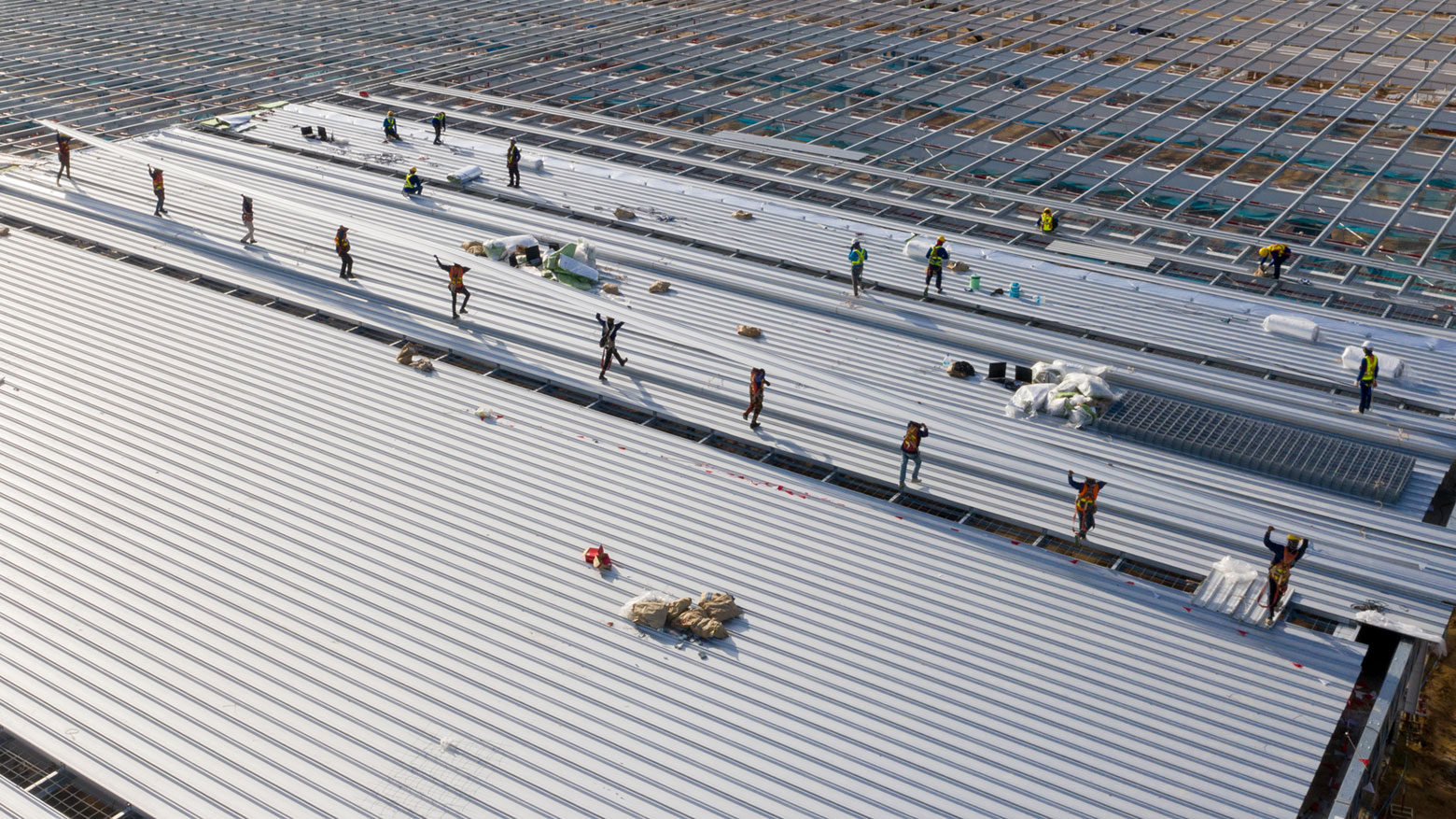
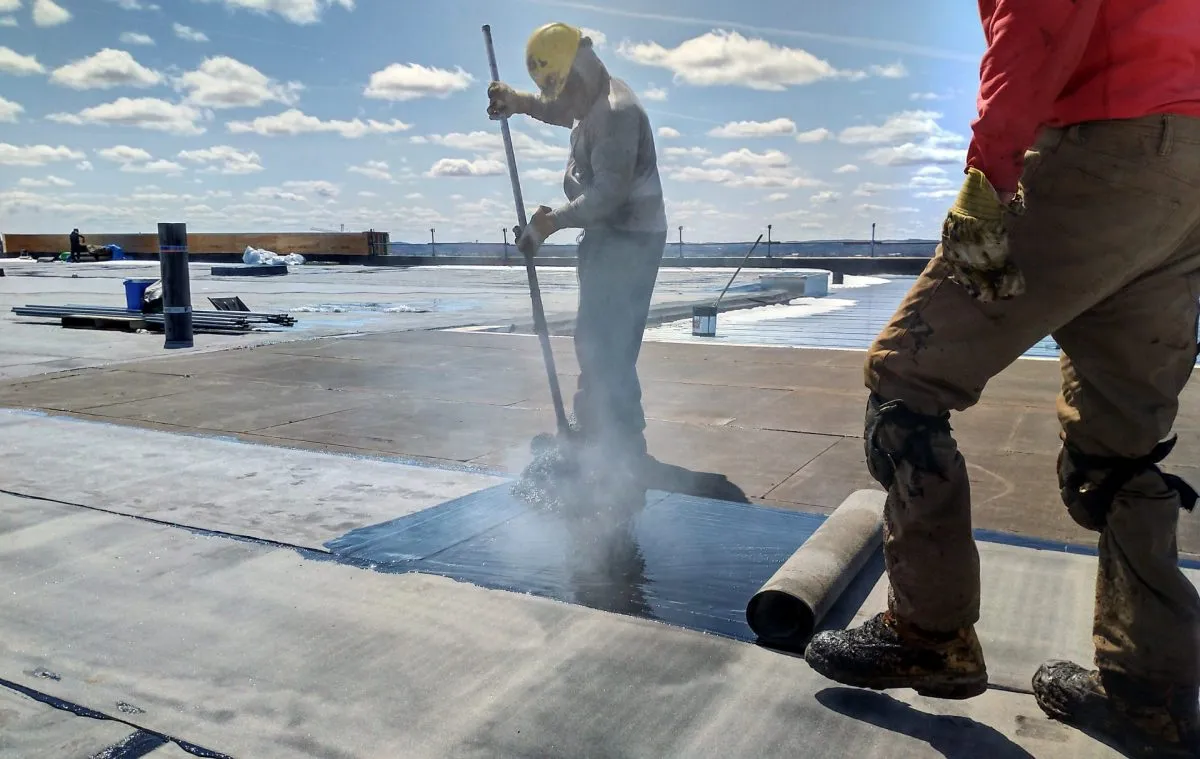
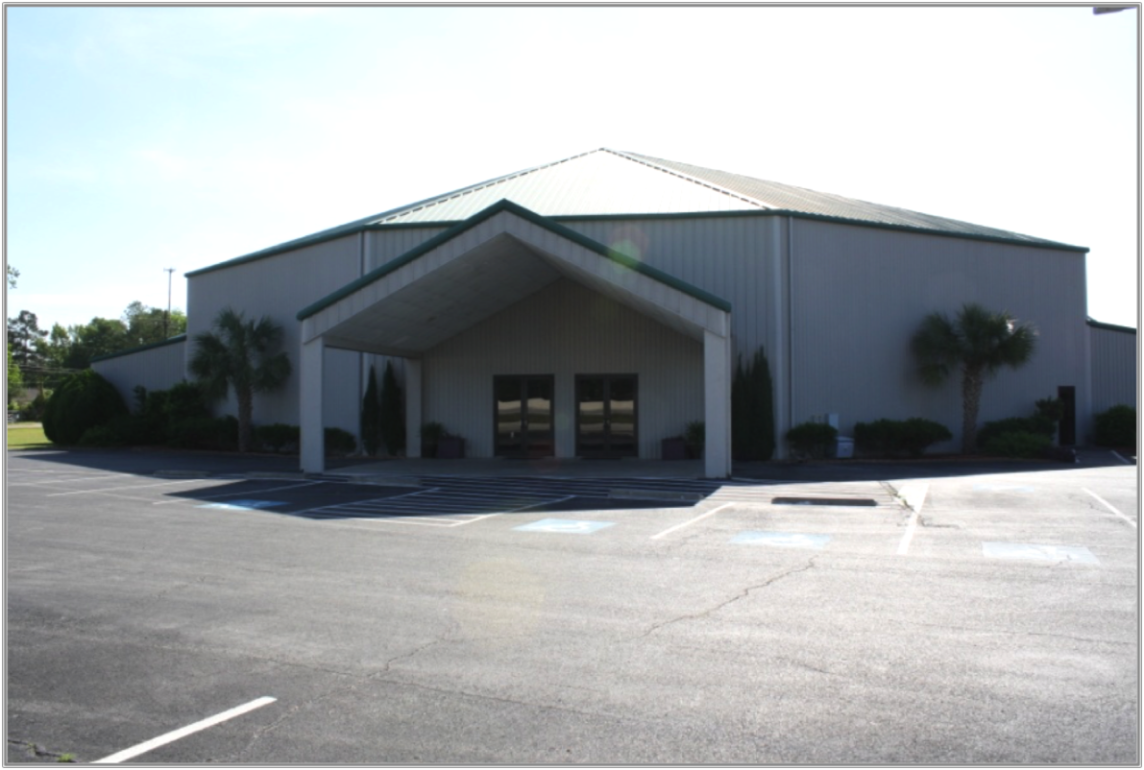
Detroit flex buildings run from 1970s tilt-wall with built-up roofing to modern pre-engineered metal buildings with standing seam. The reroof spec follows the deck type, the existing assembly condition, and what the current tenants can tolerate for disruption:
Vacancy transitions create silent leaks
Lease turnover is where flex roofs quietly fail. When a tenant vacates and pulls its rooftop units, the open curbs are often left under temporary covers that fail within a rain event or two, and vacant bays collect debris faster than occupied ones. A flex inspection during lease transition should always confirm curb-cap status, verify that former-tenant penetrations are properly sealed, and check that the drains are clear, because the leak that shows up in the next tenant's space usually started in the gap between leases.
Warranty coordination across changing tenants
A flex roof warranty is only as good as the discipline around what gets cut into the membrane after it is installed, and that is where multi-tenant buildings get owners in trouble. When the next tenant's HVAC contractor sets a unit and cuts a curb without a manufacturer-approved tie-in, the new penetration can void coverage for the whole roof. We set the building up to avoid that: a documented penetration procedure the property manager can hand to any tenant's contractor, manufacturer-approved details for adding curbs and pipe penetrations, and an inspection step before a new tenant's rooftop work is closed up. For portfolios, we keep the warranty paperwork and as-built penetration maps consistent across buildings so coverage does not quietly lapse one tenant improvement at a time.
Mixed loads and tenant-specific rooftop equipment
The other thing that makes flex roofs unpredictable is that every bay loads the roof differently. A light-manufacturing tenant may add dust collection and process exhaust, a tech tenant a dense bank of cooling units, a distribution tenant almost nothing, and a service contractor a welding-exhaust fan, all on the same envelope that started as a bare warehouse. We map the actual equipment bay by bay, confirm the deck and structure can carry the heavier concentrations before more units go up, and flash each tenant's penetrations for what that equipment really does rather than to a single generic curb detail. Solar is increasingly part of this picture on Detroit flex roofs, so where an owner is weighing a rooftop array we confirm load capacity and plan attachment and membrane compatibility before panels are committed.
Coordinating many tenants at once
Multi-tenant coordination starts with a bay-by-bay occupancy map and lease-contact list from property management. We identify which tenants have active rooftop equipment, which bays are vacant, and which tenants are sensitive to noise or HVAC downtime. Work sequencing and daily dry-in plans run through property management, tenants get advance notice, and communication flows through the property manager rather than directly to the crew so nothing gets lost across a dozen suites.
Questions Detroit flex owners and managers ask
How do you handle undocumented tenant penetrations?
Our pre-project survey photographs and maps every penetration, compares it to original drawings where available, and flags improperly sealed ones for remediation before new membrane is installed, which heads off warranty disputes later.
What membrane is best for a multi-tenant flex building?
60-mil TPO mechanically attached over tapered polyiso for most tilt-wall and concrete buildings; 80-mil TPO or 60-mil PVC fully adhered where equipment density or service traffic is high.
How do you coordinate around multiple tenants?
We work from a bay-by-bay occupancy map and lease-contact list, sequence around active and vacant bays, and route all communication through property management with advance notice to tenants.
How do you price flex roofing for investors?
Per roof square, based on membrane spec, assembly condition, penetration density, and bay configuration, with standardized condition reports for portfolio owners doing capital planning across multiple properties.
Do you handle standing seam on pre-engineered buildings?
Yes. We evaluate metal recover systems, including silicone-coated metal and retrofit standing seam, against full tear-off based on panel condition, purlin spacing, and load capacity, and install both.
Roof-area photos, access notes, leak points, rooftop equipment conditions, and visible membrane details.
Drainage, seams, curbs, penetrations, edge metal, winter exposure, repair limits, and replacement triggers.
A practical split between emergency work, repair, maintenance, coating, recover, and replacement planning.