Sports & Recreation Facility Roofing in Detroit, MI
Sports and Recreation Facility Roofing in Detroit, MI
Recreation buildings combine two of the hardest things you can ask of a roof: enormous column-free spans and air that is constantly wet. A field house, a community gym, or an indoor pool encloses a volume the size of a small warehouse with no interior walls to break it up, and the people and water inside fill that volume with humidity. Then it asks the roof to perform on a calendar that runs nights, weekends, and holidays — precisely the hours most contractors keep clear. Sports and recreation roofing in Detroit means engineering for the span, defending against the moisture, and showing up when the building is between programs instead of when it is convenient for us.
Detroit's recreation landscape is broad. The city's parks-and-recreation department operates community centers across the neighborhoods, several built or renovated through the Strategic Neighborhood Fund work of recent years. Suburban park districts and the area's many YMCA branches run gyms and aquatic centers throughout Metro Detroit. Wayne State and the area's colleges maintain field houses and natatoriums, and private clubs and sports-entertainment venues fill out the rest. Whether the building is a 1970s municipal rec center or a new aquatic complex, the roof problem comes down to the same two variables: how far it spans and how wet it gets inside.
The Natatorium Is the Hardest Roof We Build
An indoor pool is the most aggressive environment a roof faces in this category, and the culprit is chloramine. When pool chlorine reacts with the sweat, oils, and organics swimmers bring in, it off-gasses chloramine — a corrosive vapor that eats standard steel flashing, aluminum edge metal, and some membrane adhesives from the inside out. A natatorium roof in Detroit cannot be specified like any other building. We use stainless or copper flashing in the chloramine zones, confirm membrane and adhesive compatibility against the manufacturer's chemical-resistance data, and make sure the ventilation pushes that air toward the exterior rather than recirculating it under the pool-hall roof where it concentrates and accelerates the attack. Skip any of that and the roof is failing before the warranty is cold.
Humidity and the Vapor Retarder
Even without a pool, athletic occupancy throws off serious moisture. Locker rooms, showers, and a packed gym floor drive vapor up into the assembly, and if the vapor retarder is in the wrong place for Detroit's cold climate, that moisture condenses inside the system and quietly ruins the insulation. The retarder belongs on the warm side here, sized to the actual interior load — what suits a dry western climate is exactly wrong for Michigan winters. We run a moisture survey before finalizing scope, because recovering over a wet or misspecified assembly compounds the problem instead of solving it.
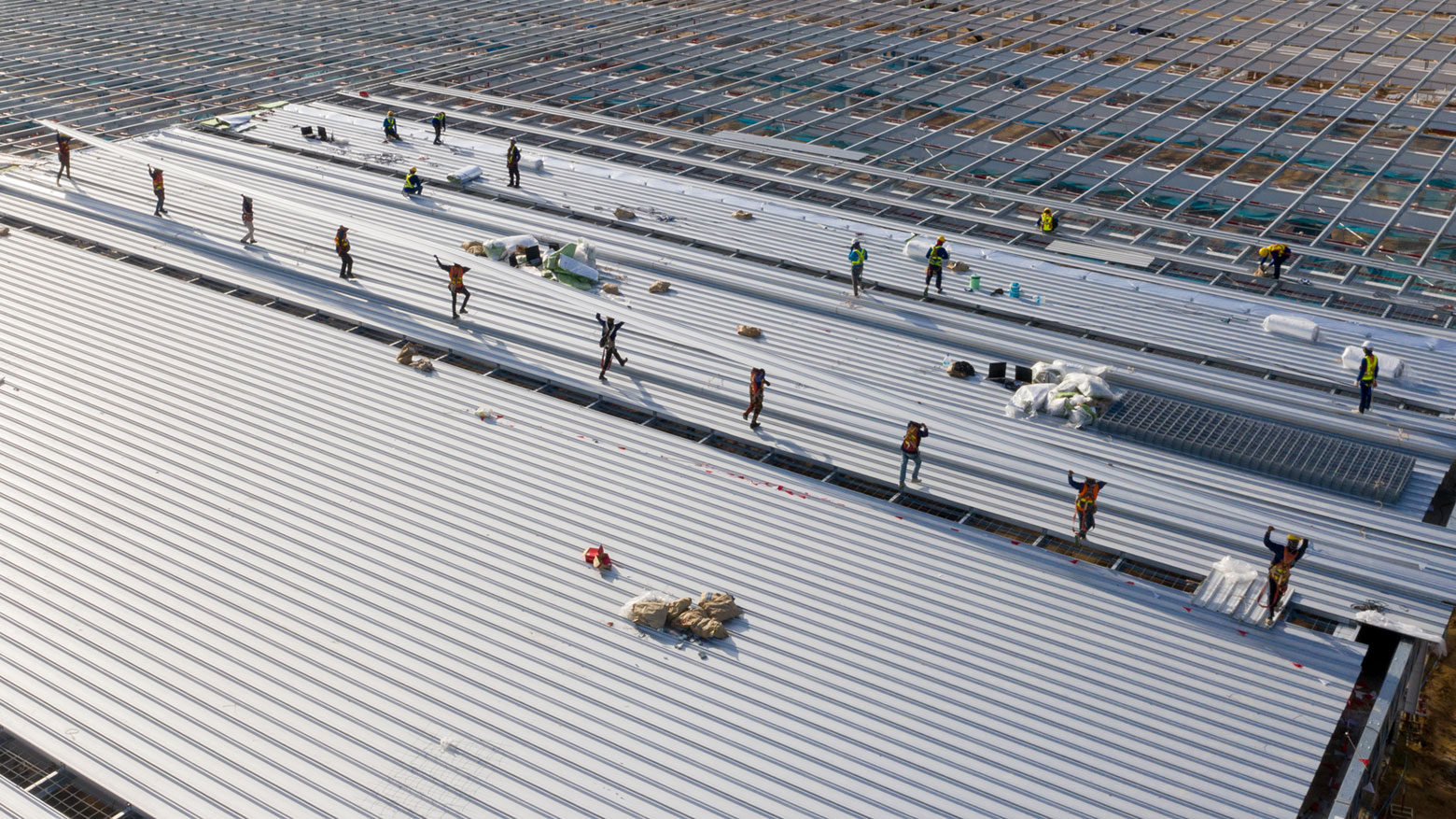
Gymnasium and arena roofs span far enough to behave like the clear-span decks over a movie theater, deflecting and pulling at the perimeter under wind and snow load. The attachment has to match the real deck and span: steel deck at an 80-foot span needs entirely different fastener pull-out math than the same deck at 30 feet. We provide the structural deck evaluation and the fastener specification as part of the scope rather than assuming a pattern off a chart.
Working Around the Program Calendar
Recreation facilities are busiest exactly when contractors want to go home — evening leagues, weekend tournaments, holiday open swims. We take the programming calendar from facility management and plan around it. Gym and arena roof work concentrates in weekday daytime hours with a watertight dry-in confirmed before evening programs begin. For aquatic centers we coordinate any exhaust or HVAC penetration work with the pool operations team, because anything that disturbs air exchange over the pool hall has to be timed when the water is closed.
Public Procurement and Private Clubs
Many of these buildings are public, and that changes how the work gets contracted. Municipal rec centers, park-district facilities, and school gymnasiums in Detroit come through public bid advertising, with bid bonds, performance and payment bonds, and prevailing-wage compliance where it applies. We carry the bonds and insurance for public work in Michigan and know the documentation those contracts require. Private clubs and sports-entertainment venues take a different procurement path but bring their own scheduling complexity around memberships and event calendars. We have run both.
Our pool building corrodes everything on the roof. What can be done?
That is chloramine attack. We specify stainless or copper flashing in the exposed zones, verify the membrane and adhesives against the manufacturer's chemical-resistance data, and make sure ventilation exhausts that air outside instead of recirculating it under the roof.
How do you keep moisture out of the assembly on a humid facility?
With a vapor retarder positioned correctly for Detroit's cold climate and sized to the interior load. We run a moisture survey first, because recovering over a wet or wrongly built assembly only makes the problem worse.
Can you work around our evening and weekend programming?
Yes. We take your programming calendar and concentrate roof work in weekday daytime hours, confirming a watertight dry-in before evening programs start. Pool-area exhaust work is timed with operations when the water is closed.
Do you handle public bids for municipal rec centers and school gyms?
Yes. We carry the bid, performance, and payment bonds and the insurance for public work in Michigan, comply with prevailing wage where it applies, and meet the documentation requirements of municipal facility contracts.
What membrane suits a large gymnasium roof?
Typically 60- or 80-mil TPO mechanically attached over polyiso, with the fastener pattern engineered to the specific deck type and span rather than pulled from a generic table.
Roof-area photos, access notes, leak points, rooftop equipment conditions, and visible membrane details.
Drainage, seams, curbs, penetrations, edge metal, winter exposure, repair limits, and replacement triggers.
A practical split between emergency work, repair, maintenance, coating, recover, and replacement planning.