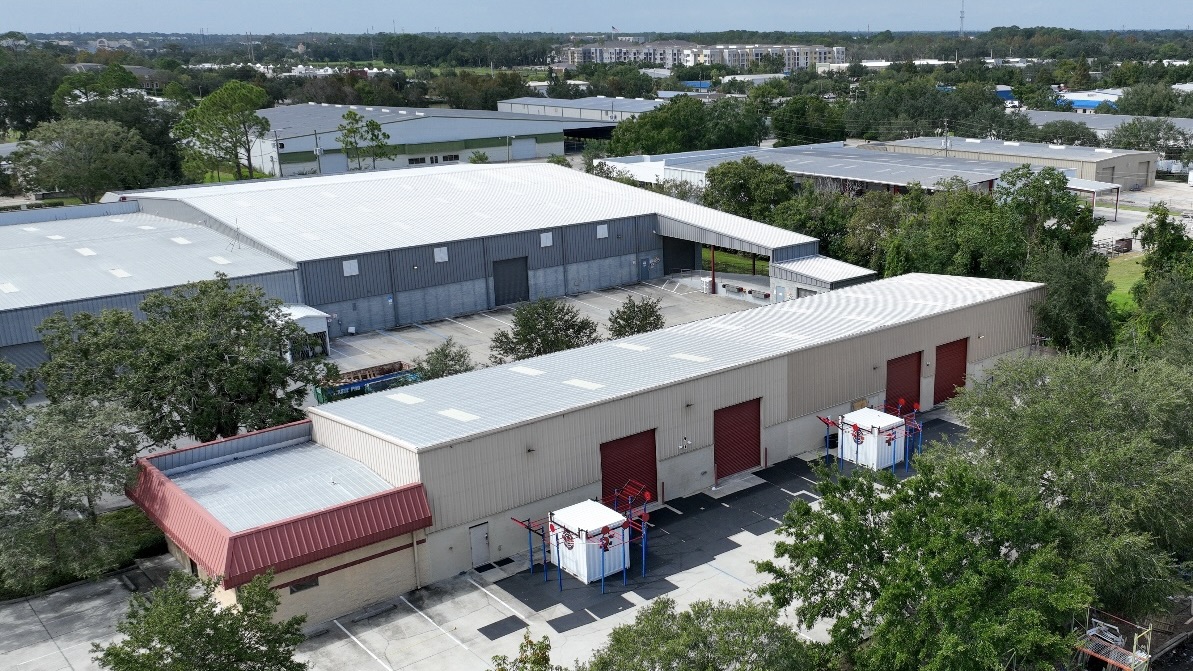
Aerial & Thermal Drone Roof Inspections in Detroit, MI
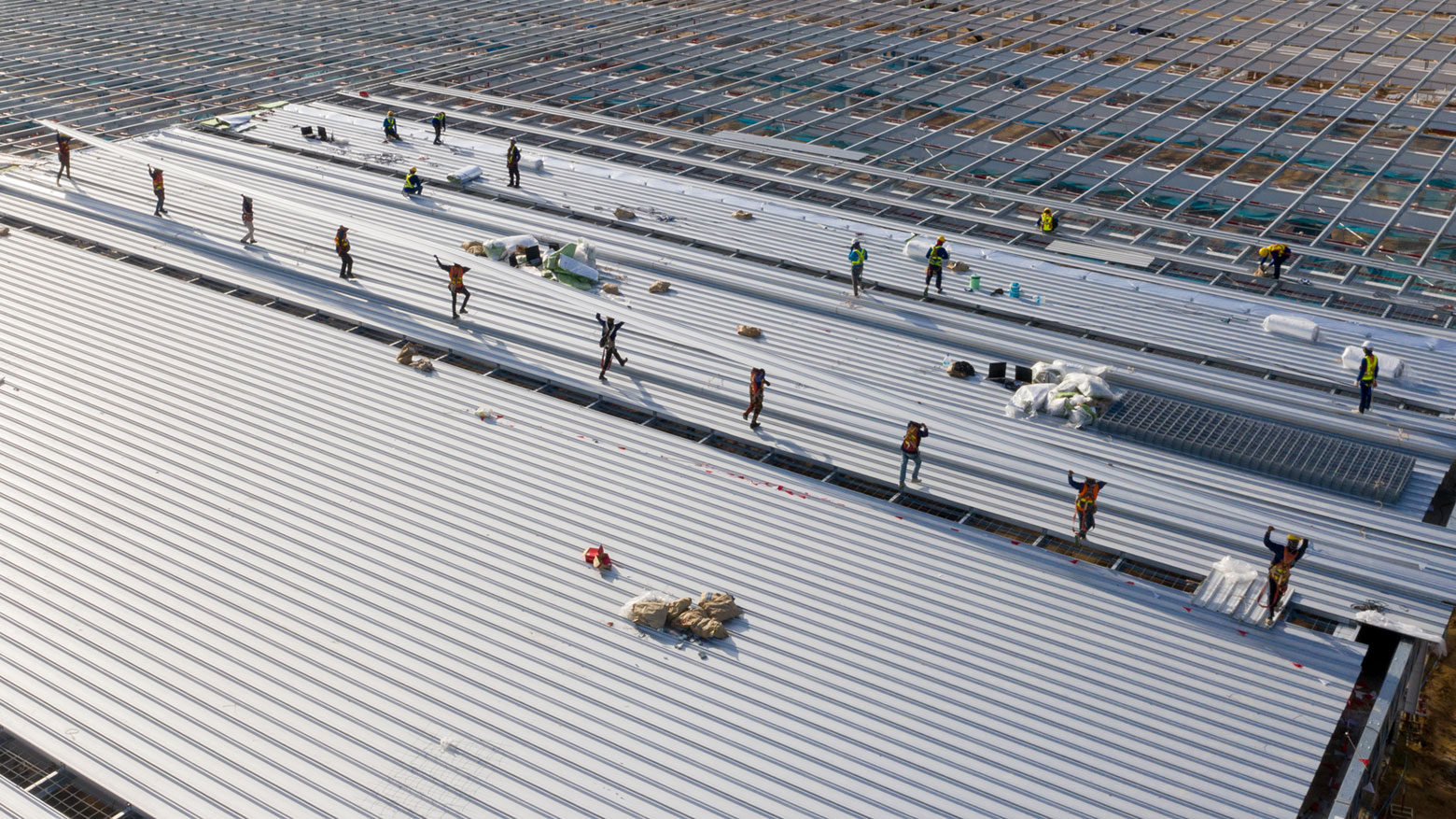
The biggest Detroit roofs are the ones a person can least afford to walk
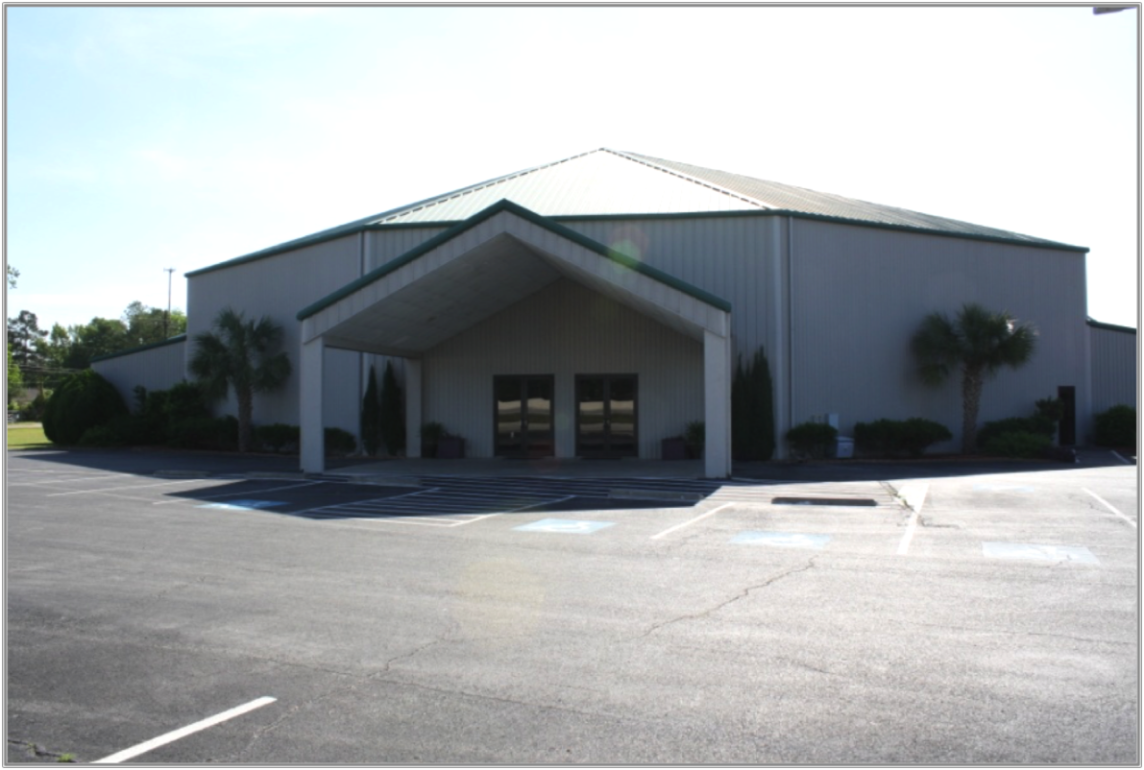
Picture a fulfillment building off the we-94 Industrial Expressway with five or six acres under a single membrane, or a multi-story former manufacturing plant near the riverfront, or the long roof spans over the self-storage facilities pushing out toward Warren and Dearborn. A two-person crew walking those roofs sees a slice of them, gets tired in the far corners, and steps repeatedly on a membrane whose condition is the very thing in question. We do not start there. We fly the roof first, build a complete picture of what is actually happening across the whole surface, and only then decide whether anyone needs to set foot on it.
What an aircraft gives us is consistency. We grid the roof at a fixed altitude and capture every drain sump, lap seam, curb, pipe boot, and field area in high resolution, with each frame tagged to its position on the roof. There is no untouched corner because the flight pattern does not get tired. For an owner or property manager, that translates into a full condition record rather than a sampling, and it lets us form a defensible opinion about the roof before adding a single pound of foot traffic to it.
Infrared is the part that pays for itself
The highest-value thing aerial work does on a Detroit low-slope roof is find water that has already gotten into the insulation. Here is the physics that makes it possible: insulation soaked with moisture stores heat differently than the dry board beside it. After a sunny day, dry areas shed their heat quickly once the sun goes down, while saturated areas hold warmth and keep radiating it. Fly a thermal camera over the roof during that evening cool-down and the wet zones light up plainly in infrared, even when the membrane above them looks flawless from the surface.
In Detroit's climate that diagnosis is not academic, it is urgent. Moisture that seeps into the assembly through a failed seam or flashing in autumn freezes when the temperature drops, and freezing water expands. Cycle that through a Michigan winter and the trapped water mechanically breaks down the insulation, delaminates facers, and corrodes a steel deck, all of it happening underneath an intact-looking roof long before a ceiling tile ever shows a stain. The thermal map turns that invisible decay into measured square footage you can point to.
Why the moisture map changes the budget conversation
That map is what separates a targeted repair from money thrown at the wrong problem. If the infrared scan flags a handful of discrete wet areas, the smart play is to cut those sections out, replace the saturated insulation, and recover the rest of the roof for years more service. If the scan lights up across most of the field, you have your answer: patching is a waste and a tear-off is the honest path. Either way you are budgeting against documented reality rather than a contractor's hunch, and you can plan capital around real wet-insulation square footage instead of a round-number guess.
Where a walkover still makes sense, and where it does not
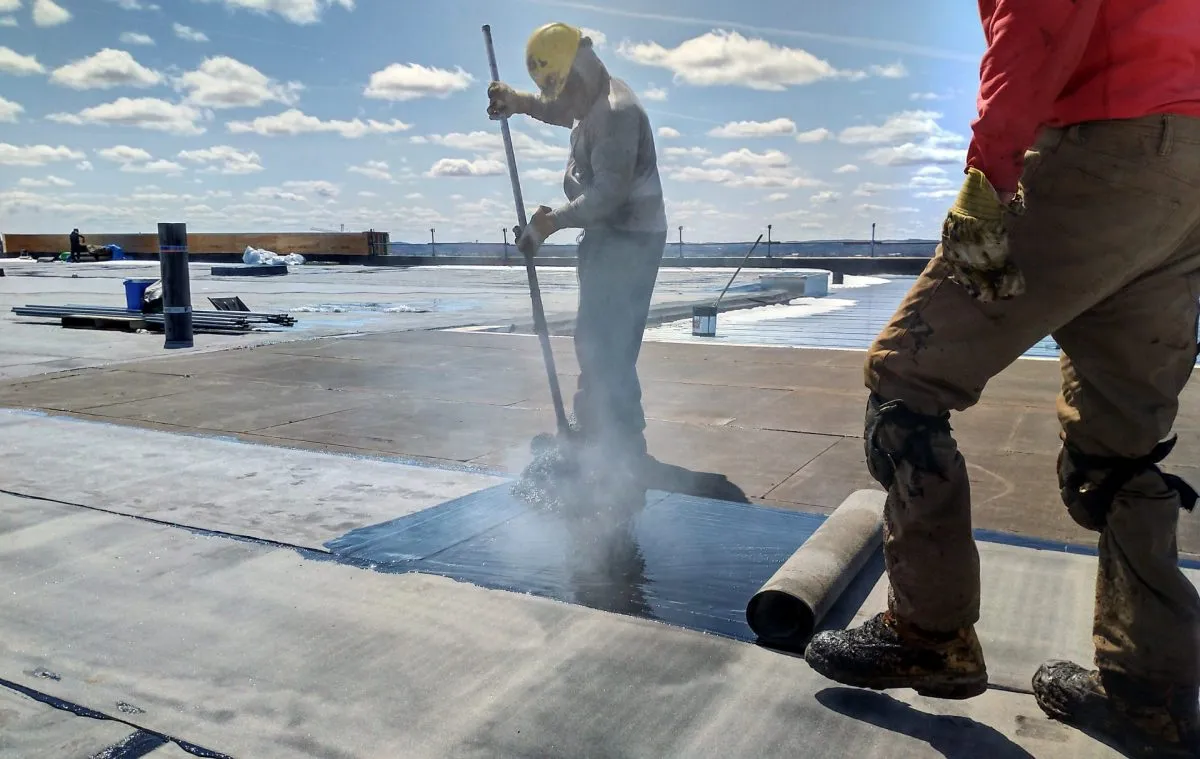
On a small or steep roof a person can cover quickly, a hands-on walk is perfectly appropriate and we do them. On a sprawling flat commercial roof, a manual inspection falls down on two counts. Coverage is partial because nobody systematically grids acres of membrane on foot, and a meaningful thermal survey is essentially impossible that way, since it depends on the uniform overhead pass that only a flight produces. Factor in the wear each visit adds and the liability of sending people onto a roof whose integrity is still unknown, and flying it is both the more thorough and the safer choice.
Flying it legally over Detroit airspace
Commercial drone operation is regulated and we treat the rules as non-negotiable. Our flights run under the FAA's Part 107 framework for small commercial unmanned aircraft, which governs pilot certification, operating altitude, and how we work near people and structures. Detroit adds a genuine complication: large portions of the metro fall under the controlled-airspace shelves for Detroit Metropolitan Wayne County and Coleman A. Young International, so for many sites we secure airspace authorization through the FAA's LAANC system before we ever leave the ground. We also plan around wind limits, keep the aircraft within visual line of sight, and keep the area beneath the flight path clear. Handling all of that is our job, not yours.
Documentation an adjuster will actually accept
After hail or a windstorm, the inspection shifts from diagnosis to evidence. Detroit takes its share of severe summer convective storms sweeping across the lakeplain, and when one batters a roof, the insurance claim succeeds or fails on the quality of the documentation. We deliver a geo-tagged photo report that pinpoints hail strike locations and density, maps wind-lifted membrane and displaced edge metal, and records damage to rooftop units and accessories, organized the way commercial property carriers expect to receive it. An adjuster can review the package remotely, which compresses the timeline, and on a disputed claim the aerial record is far harder to wave off than a few photos shot from the parking lot.
Sharper reroof specs, fewer change orders
We also fly roofs ahead of a replacement so the specification is drawn from real conditions rather than old as-builts. The flight verifies the actual roof area, locates every penetration and curb, and documents existing details, which means the bid set reflects what is genuinely up there. Projects scoped from accurate aerial data run with fewer mid-job requests for information and fewer change orders, because nobody is discovering a forgotten skylight curb or a miscounted drain after the crew has already mobilized.
A baseline that gets more valuable every year
One flight is useful. A multi-year record is where the real leverage is. Fly the same roof annually and we can overlay this year's thermal scan on last year's and watch a wet zone hold steady or creep outward. An area that doubles between inspections is telling you the leak is live and the assembly is losing ground, and that trend is exactly the evidence that justifies acting this budget cycle instead of deferring again. For an owner managing several Detroit properties, that consistent baseline turns a scattered set of roofs into a portfolio you can rank, so capital lands where the data says the risk is highest rather than wherever the loudest tenant complained.
If you own or manage a Detroit commercial roof north of roughly ten thousand square feet and you need a real condition assessment, a drone survey is the efficient way to get one. Routine inspections can usually be scheduled within a few business days. Post-storm flights for claim documentation get prioritized and can often happen within a day or two of the event, weather and airspace permitting. Reach out and we will confirm the turnaround, handle the airspace clearance, and hand you a report you can actually make decisions from.
Roof-area photos, access notes, leak points, rooftop equipment conditions, and visible membrane details.
Drainage, seams, curbs, penetrations, edge metal, winter exposure, repair limits, and replacement triggers.
A practical split between emergency work, repair, maintenance, coating, recover, and replacement planning.