Government and Municipal Building Roofing in Detroit, MI
Commercial roofing for government buildings, municipal facilities, and public infrastructure.
Detroit's publicly owned building inventory reflects the city's extraordinary architectural ambition at the peak of the industrial era and the hard fiscal realities that followed. The Coleman A. Young Municipal Center—commonly called the City-County Building—is a 19-story modernist tower that anchors a civic campus near the Detroit River. The Frank Murphy Hall of Justice handles high volumes of criminal proceedings, the Detroit Police Department operates precincts spread across 139 square miles, the Detroit Fire Department maintains dozens of stations including some of the oldest continuously operating fire houses in the Midwest, and the Detroit Public Library system anchors neighborhood literacy infrastructure with the main Burton Historical Collection building on Woodward Avenue. Maintaining the roofing on this aging, architecturally significant portfolio under the constraints that emerged from Detroit's 2013 bankruptcy requires a combination of technical expertise and fiscal realism that shapes every capital project the city undertakes.
Detroit's procurement for construction services operates under the City Charter and the Detroit Code of Ordinances, which require competitive sealed bidding for public works above established thresholds. The City of Detroit's Office of Contracting and Procurement advertises roofing solicitations through the Detroit e-Procurement system, the city's website, and the Michigan Procurement Institute's vendor outreach network. Detroit maintains an active Resident and Detroit Business Enterprise program that requires contractors to demonstrate meaningful local hiring and to engage Detroit-certified businesses as subcontractors on city contracts. RBE compliance is evaluated during bid review, and contractors who cannot demonstrate genuine local workforce engagement face scoring penalties that affect award decisions. This program reflects Detroit's ongoing commitment to ensuring that public investment circulates within the city's recovering economy.
Michigan's climate delivers a demanding roofing environment across all four seasons in Detroit. Lake Erie and Lake St. Clair moisture systems produce significant snowfall accumulations on flat municipal roofs, ice dam formation in parapet gutters, and freeze-thaw cycling that stresses membrane seams and expansion joints in brick and concrete structures built without modern thermal bridging mitigation. Summer thunderstorms crossing from southwestern Ontario produce intense hail and wind events that have damaged publicly owned structures in multiple Detroit neighborhoods. The city's Facilities Management Division has documented a pattern of roof failures on municipal buildings that were maintained reactively rather than proactively, and the post-bankruptcy capital planning process has made systematic roofing condition assessments a baseline input for the annual Capital Agenda submitted to Detroit City Council.
Historic preservation is a significant factor in Detroit municipal roofing because the city's architectural patrimony is genuinely exceptional. The , designed by Cass Gilbert in Italian Renaissance style, features elaborate terra cotta cornices, copper gutters, and a complex roof geometry that requires preservation specialists rather than general commercial roofing contractors. The Michigan State Historic Preservation Office reviews work on Register-listed properties when public funds are involved, and the Detroit Historic District Commission has jurisdiction over designated landmarks within the city. Contractors who have completed preservation roofing work on comparable Cass Gilbert or Albert Kahn civic structures elsewhere in the Midwest have a credibility advantage in Detroit's historic municipal roofing market that is difficult to replicate quickly.
Energy efficiency is increasingly integrated into Detroit's municipal roofing specifications, driven by both the city's 2019 Detroit Sustainability Action Agenda and the financial reality that reducing utility costs frees budget capacity for other city services. The Detroit Building Authority, which manages capital improvements on behalf of city departments, has begun specifying continuous polyisocyanurate insulation upgrades on re-roofing projects for occupied municipal buildings, using the insulation installation as an opportunity to bring decades-old building envelopes closer to current ASHRAE 90.1 compliance. Michigan Saves financing and DTE Energy rebates have helped offset the incremental cost of these insulation upgrades on pilot projects, and the Building Authority is developing a portfolio-wide strategy to prioritize the highest-energy-consuming facilities for early re-roofing investment.
Detroit Fire Department stations occupy a special place in the city's infrastructure because the Fire Department has been both a subject of national attention for its challenges and a source of genuine community pride. Station buildings range from well-maintained modern facilities to structures dating to the early twentieth century with original slate roofing, timber decks, and masonry parapets that require careful evaluation before any re-roofing scope is finalized. The City of Detroit Facilities Management team coordinates with DFD's apparatus floor supervisors and district chiefs when developing station re-roofing phasing plans, and the specifications for fire station work in Detroit explicitly prohibit activities that would block apparatus bay egress or interrupt radio communications with the DFD Communications Center on Beaubien Street without prior written approval.
Prevailing wage compliance on Detroit municipal roofing projects is governed by Michigan's Prevailing Wage Act, which was reinstated by Public Act 10 of 2023 after a period of repeal. Michigan's reinstated prevailing wage law requires contractors on public improvement projects to pay roofing workers no less than the prevailing wage and fringe benefit rates established for the Wayne County construction labor market. Detroit's public works contracts routinely include prevailing wage compliance requirements, and the city's contract administration staff conducts payroll audits on active projects. Federal Davis-Bacon requirements apply additionally when CDBG, HUD Section 108, or FEMA Hazard Mitigation Program funds are incorporated into project financing, and contractors must track applicable wage rates across both the state and federal frameworks when multiple funding sources are combined.
The warranty requirements that Detroit's Building Authority negotiates on major re-roofing contracts reflect hard lessons learned from the city's fiscal crisis period, when deferred maintenance and expired warranties left several municipal buildings with unprotected roofs and no viable claim against installer or manufacturer. Current standard contract language requires manufacturer-issued system warranties of 20 years minimum with NDL coverage, and the Building Authority reviews manufacturer financial stability before approving products for the city's approved materials list. The list is maintained to ensure that warranties issued today will be backed by solvent companies two decades from now, and national brands with documented long-term market presence are preferred over regional manufacturers whose longevity cannot be verified with the same confidence.
Wayne County maintains its own building portfolio in Detroit that includes the Frank Murphy Hall of Justice, the Guardian Building (leased for county offices), the Wayne County Jail facilities, and the Wayne County Circuit Court complex. Contractors who successfully complete roofing work for the City of Detroit often find Wayne County's procurement staff receptive to their qualifications, and the two procurement systems operate with enough similarity under Michigan public works law that contractors familiar with one can navigate the other without significant re-learning. Southeastern Michigan has a competitive commercial roofing market, and contractors who differentiate themselves through documented public sector experience, reliable RBE subcontractor networks, and demonstrated Michigan prevailing wage compliance build a sustainable competitive position that purely private-sector focused competitors cannot easily replicate.
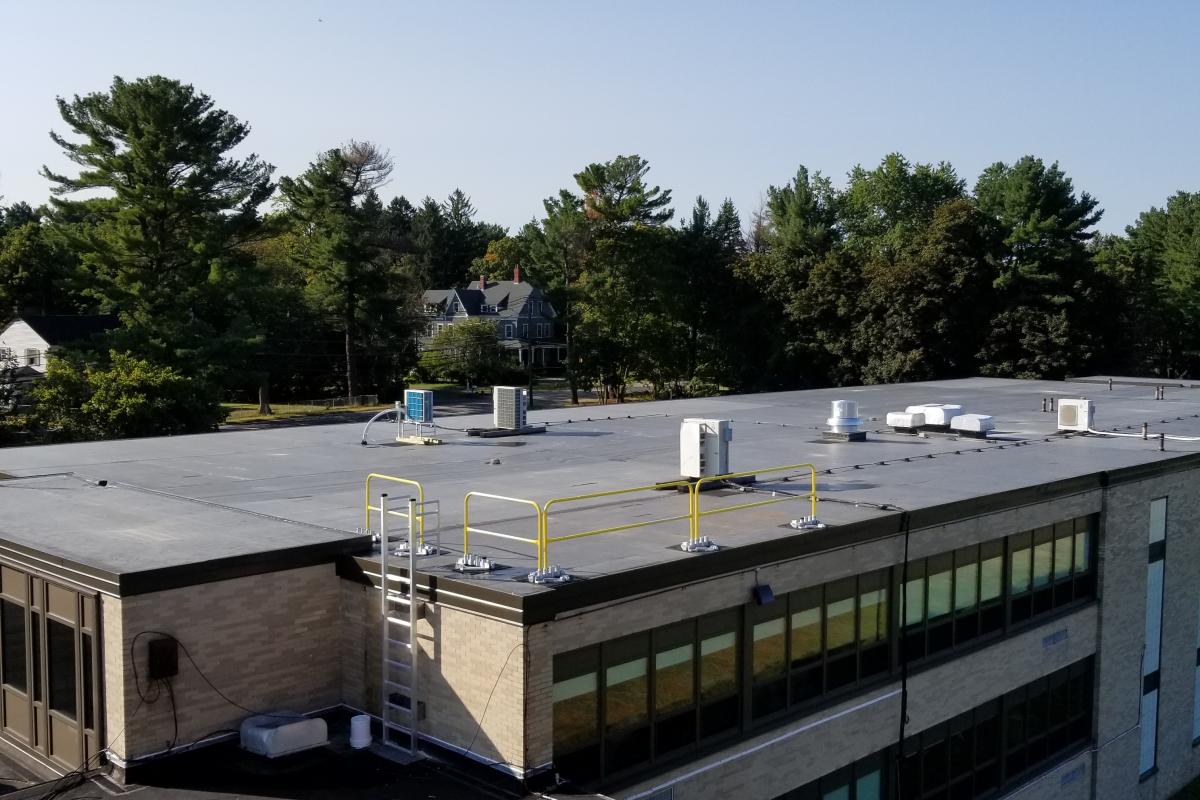
Roof-area photos, access notes, leak points, rooftop equipment conditions, and visible membrane details.
Drainage, seams, curbs, penetrations, edge metal, winter exposure, repair limits, and replacement triggers.
A practical split between emergency work, repair, maintenance, coating, recover, and replacement planning.