Office Building Roofing in Detroit, MI
Commercial roofing for office buildings, professional parks, and corporate campuses.
The General Motors Global Headquarters at the Renaissance Center in Detroit, the iconic riverfront office and hotel complex on the Detroit River, is one of the most recognized corporate campuses in the Midwest and one of the most demanding commercial roofing environments in the region. Detroit's resurgent office market, which spans the Renaissance Center, the New Center area, and suburban corridors in Troy, Southfield, and Auburn Hills, reflects the city's automotive heritage and its evolving tech, healthcare, and mobility sector growth. Office building roofing in Detroit must manage occupied-building complexity, Michigan's severe climate, and the high standards of institutional tenants who treat building condition as a direct reflection on their corporate brand.
Occupied-building protocols on Detroit corporate campuses must account for the automotive and technology sector tenants who often have highly secure and sensitive operations within their leased floors. GM's Renaissance Center campus and similar corporate headquarters in the Detroit metro have engineering operations, vehicle development data, and IT infrastructure that cannot tolerate construction-related interruptions or unauthorized access. Roofing projects on these buildings require security clearance processes for all workers, detailed staging plans that minimize construction zone footprints on occupied floors, and dedicated project managers who serve as the single point of escalation for any tenant concern during the project. Detroit's major corporate tenants have experienced facility directors who will hold roofing contractors to the highest occupied-building management standards.
Green roof and aesthetic considerations for Detroit office buildings are increasingly important as the city's commercial real estate community uses building quality and sustainability credentials to attract and retain the technology, mobility, and professional services companies that are reshaping the metro's economic profile. Detroit's Midtown and New Center commercial districts have seen several notable green roof installations on renovated commercial buildings, and the Woodward corridor's urban context creates strong community and planning department interest in visible building landscape elements including rooftop treatments. Building owners pursuing LEED certification for Detroit office buildings will find that cool roof specifications, green roof sections, and solar installations all contribute to the certification credits that institutional tenants increasingly expect.
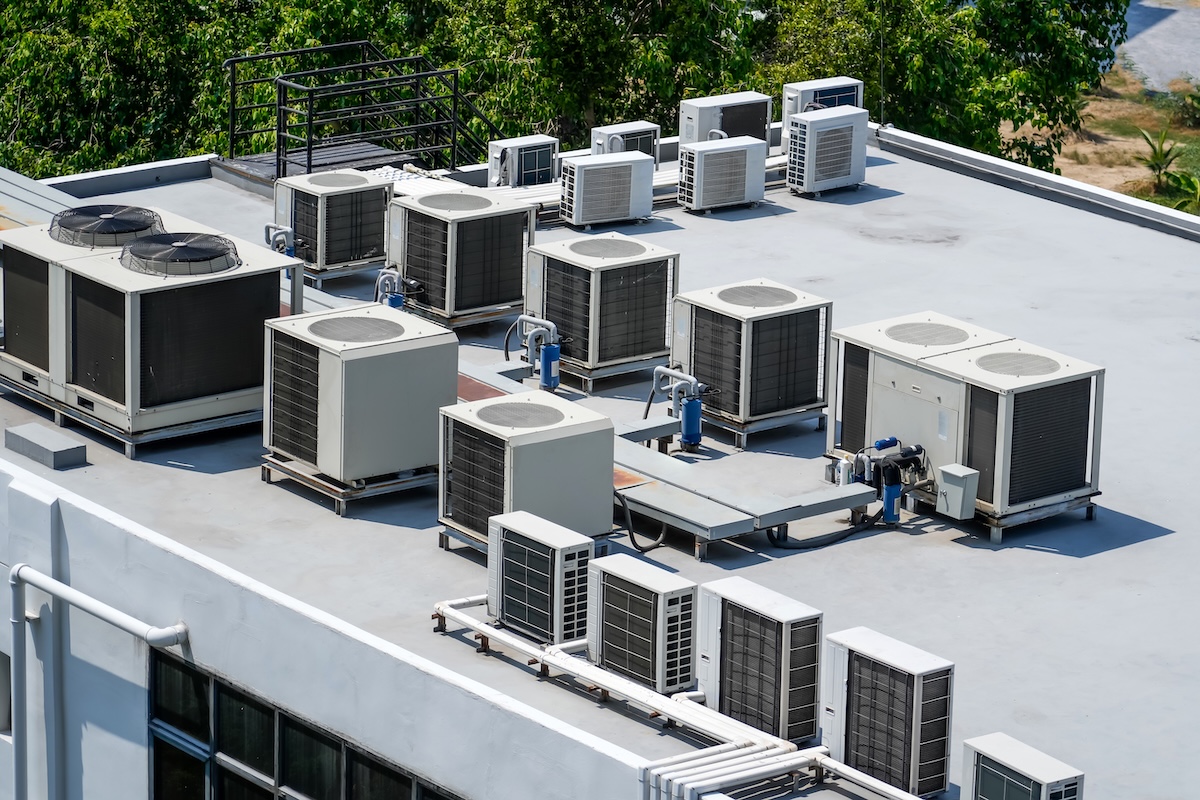
Multi-RTU coordination on Detroit office buildings must address the full heating and cooling complexity of a Great Lakes climate where both seasons are demanding. Detroit office buildings often have comprehensive mechanical systems including rooftop packaged units, cooling towers, condensate handling systems, and in older buildings, steam or hot water heating components with rooftop exhaust. The coordination plan for a Detroit office roof replacement must account for every piece of rooftop mechanical equipment, confirm which can be temporarily taken offline and which must remain in service, and establish a clear HVAC contractor coordination protocol that prevents tenant climate control disruptions during the project. Winter roofing work in Detroit carries additional complexity when rooftop heating equipment cannot be taken offline without creating tenant conditions that violate lease obligations.
Michigan energy code compliance for Detroit office buildings follows the Michigan Building Code energy provisions, which align with ASHRAE 90.1 commercial requirements. Detroit's Climate Zone 5A places significant minimum continuous insulation requirements on commercial roof assemblies, and the city's older Class B and converted industrial office buildings frequently fall well below current code minimums. Roof replacement projects that bring insulation to current code levels on Detroit office buildings reduce both heating and cooling operating costs in a climate where both seasons drive significant utility expense. DTE Energy and Consumers Energy both offer commercial energy efficiency incentive programs, and owners should verify current incentive availability before finalizing insulation specifications.
Reflective and cool roof membrane specifications for Detroit office buildings must weigh the heating-cooling balance of Michigan's climate, which is significantly more heating-dominated than markets south of the Ohio border. For all-electric office buildings, the summer cooling savings from a white reflective membrane may outweigh the winter heating penalty even in Detroit's climate, but for natural-gas-heated buildings the calculation is less clear-cut. The most defensible approach for large Detroit office projects is an energy model that uses Detroit-specific TMY weather data and the building's actual mechanical system characteristics to compare membrane options across the full annual energy cycle.
Lease renewal protection in Detroit's rebounding commercial office market — where downtown and Midtown have seen genuine tenant demand growth from technology, mobility, and professional services companies — requires building owners to demonstrate active capital investment that matches the quality expectations of growth-sector tenants. A roof in the final years of its service life is a liability in lease renewal negotiations with sophisticated corporate tenants who conduct thorough building condition assessments. Proactive replacement on a planned timeline, documented with warranty certificates and maintenance records, removes this leverage point and signals that the building ownership is invested in the long-term quality of the asset.
Cost per square foot for Detroit office building roof replacement varies widely from approximately $11 for straightforward low-rise suburban campus buildings to $18 or more for downtown high-rise buildings with complex staging, security, and mechanical coordination requirements. The Detroit metro's commercial roofing contractor community includes several established firms with manufacturer certifications and verifiable Detroit office project references, and the market's recovery has supported a healthy contractor base. Spring and fall project starts in Detroit are strongly preferred to minimize the risk of cold-weather installation complications and to avoid replacing a roof during the peak summer cooling season when mechanical coordination is most sensitive.
The Detroit office market's older building inventory — including the converted loft offices of Corktown and the New Center area — presents specific roofing complexity from legacy materials and non-standard construction types. Many buildings in these districts retain original built-up roofing or early modified bitumen systems over structural concrete or wood plank decks, and the transition to modern single-ply requires careful assessment of the existing deck's moisture content, structural capacity, and compatibility with new adhesive or fastening systems. A pre-bid core sample investigation and moisture scan on older Detroit office buildings is essential before developing a reliable scope and price for replacement.
Roof-area photos, access notes, leak points, rooftop equipment conditions, and visible membrane details.
Drainage, seams, curbs, penetrations, edge metal, winter exposure, repair limits, and replacement triggers.
A practical split between emergency work, repair, maintenance, coating, recover, and replacement planning.