Warehouse and Distribution Center Roofing in Detroit, MI
Commercial roofing for warehouses, distribution centers, and industrial storage facilities.
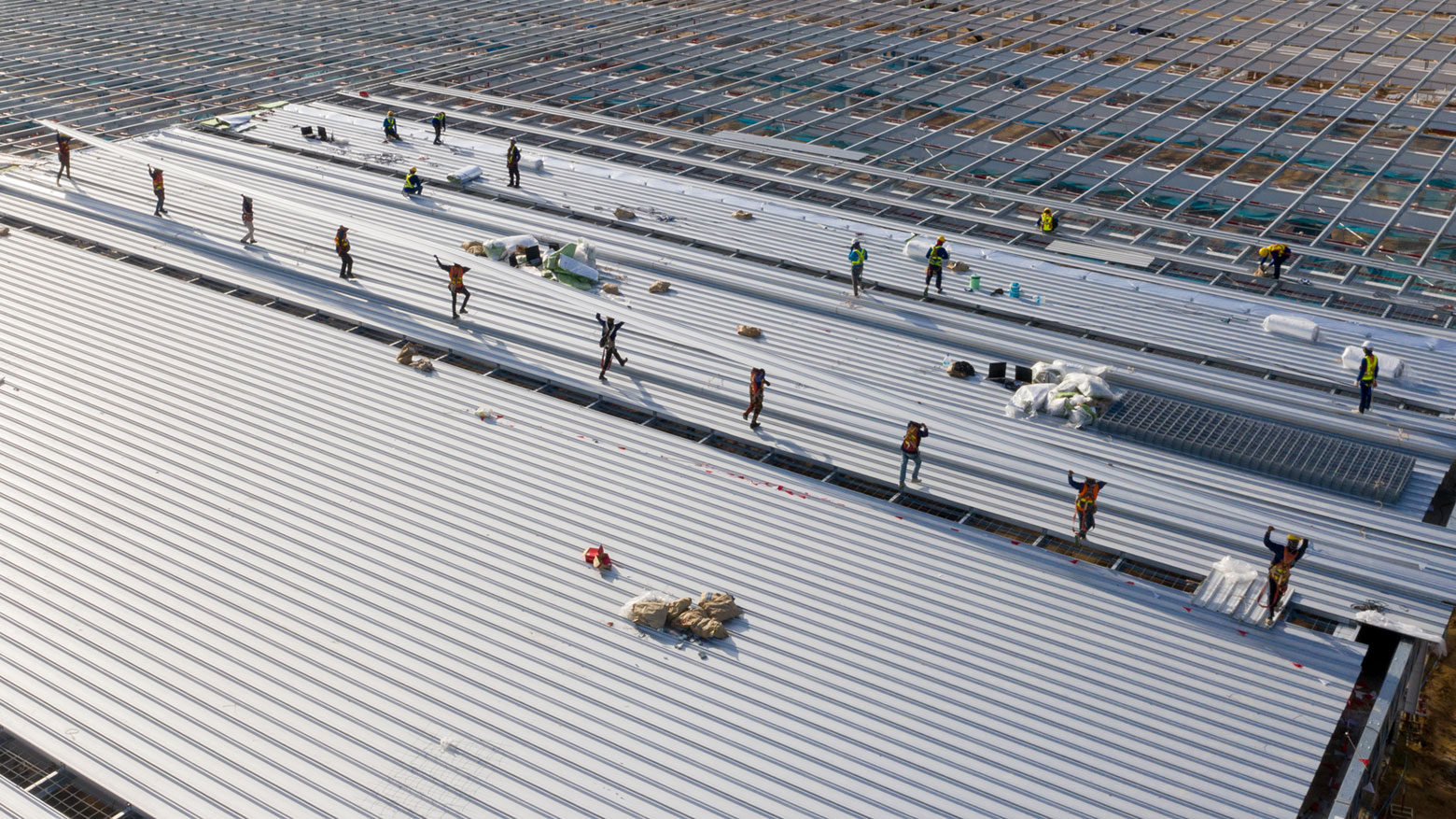
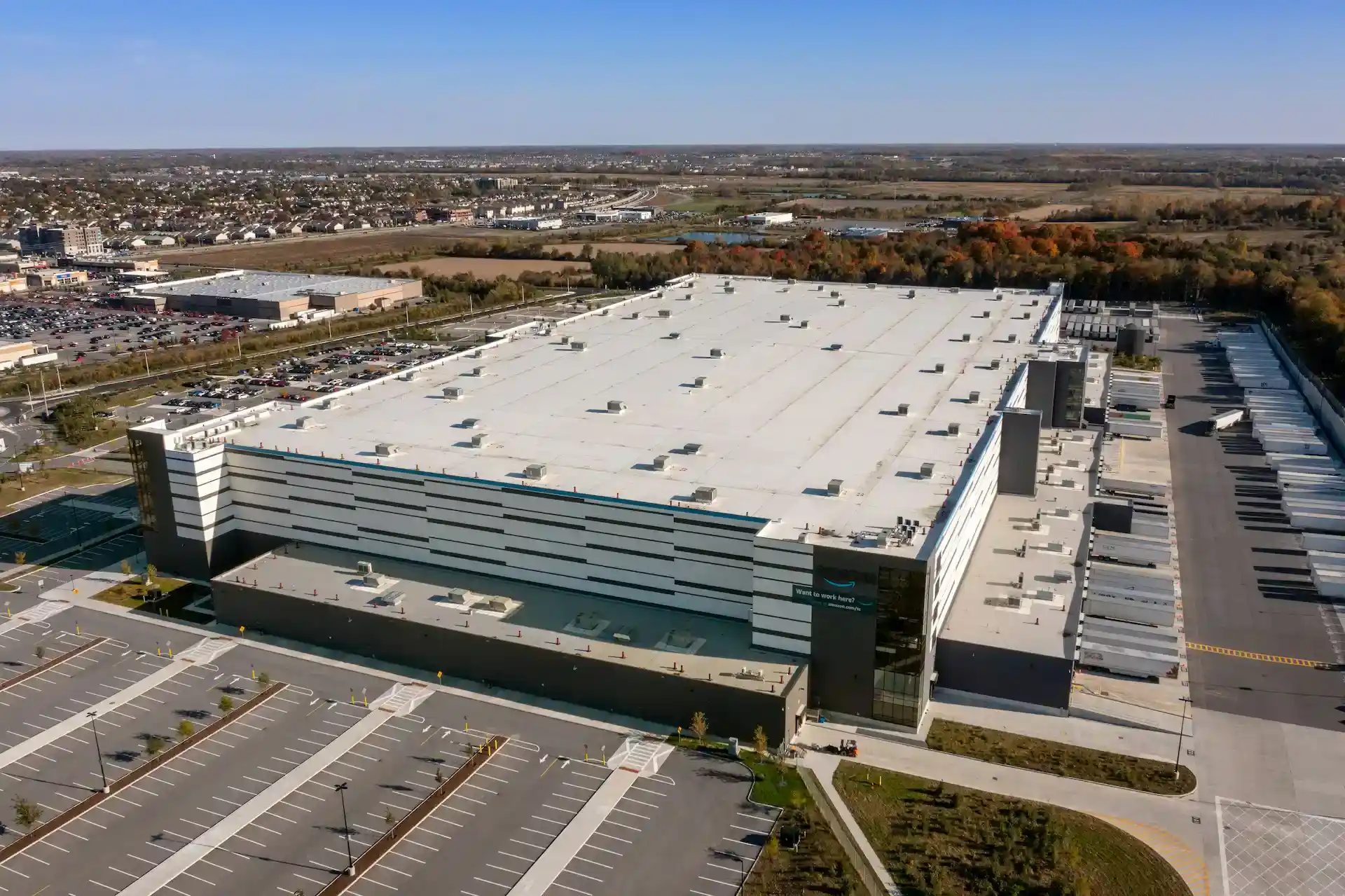
The FedEx Ground hub in Romulus, near Detroit Metropolitan Airport, is one of the largest package sorting facilities in the Midwest and illustrates the roofing demands that come with massive distribution infrastructure in Southeast Michigan. Detroit's climate combines lake-effect snow amplified by Lake Erie and Lake St. Clair proximity, humid summers that rival southern cities in absolute humidity levels, and the full range of freeze-thaw cycling that any Great Lakes industrial market endures. Warehouse roofing in the Detroit metro is a serious engineering discipline, and the cost of getting it wrong on a million-square-foot distribution facility is substantial.
Drainage engineering for Southeast Michigan warehouse rooftops must be designed with lake-effect snow events in mind. Detroit's proximity to the Great Lakes means that late fall and early winter snow events can deliver 12 to 18 inches of wet, heavy snow in a short window, and the subsequent melt load on flat warehouse roofs can approach the design snow load before the season has even properly begun. Interior drain capacity must be sized to handle rapid melt scenarios, and overflow scuppers are not optional — they are essential life-safety elements on large Michigan warehouse roofs where primary drain blockage under a heavy snowpack represents a structural emergency.
EPDM fully adhered systems have historically dominated Detroit warehouse roofing due to their exceptional cold-temperature flexibility and the long track record of EPDM installations throughout Michigan's industrial sector. Detroit-area roofing contractors have deep experience with EPDM installation in cold-weather conditions, and the local availability of EPDM materials from suppliers serving the Michigan market makes this membrane competitively priced. TPO has made significant gains in new construction, particularly for temperature-controlled distribution centers where the white reflective surface reduces summer cooling costs in a market where July and August humidity makes air conditioning a major operating expense.
Dock bay penetration flashing in Detroit warehouses faces the specific challenge of vehicle impact from the truck courts. Michigan winters are rough on truck court pavement, and trucks maneuvering in deteriorated pavement conditions sometimes make contact with dock walls at elevations that directly affect the base flashing above dock levelers. A dock wall inspection program that includes the roof flashing above each dock bay, combined with a pre-winter termination bar and sealant inspection, catches the cumulative impact and freeze-thaw damage before it becomes a water intrusion event during the spring thaw season.
Rooftop mechanical equipment on Detroit distribution centers includes not only the standard HVAC and exhaust penetrations but also, increasingly, rooftop solar panel systems that Michigan warehouse owners are adopting as utility rates have risen and the Michigan Saves program has made commercial renewable financing accessible. Each solar mounting system represents a penetration point that must be flashed to membrane manufacturer standards to preserve the warranty, and the combined load of a large rooftop solar array must be reviewed by a structural engineer against the existing deck capacity before installation. Any roof replacement on a facility considering near-term solar should include discussion of solar-ready flashing and conduit stub-outs to avoid costly penetration work after the new roof is installed.
Michigan's heating season dominates the annual energy balance for most Detroit warehouse facilities, and the state's commercial energy code through the Michigan Building Code incorporates insulation requirements that many older industrial buildings in the metro area do not meet. A roof replacement that upgrades insulation to R-25 or better through polyisocyanurate board is a strong investment in heating season energy reduction, and the Michigan Saves commercial financing program can fund the incremental cost of insulation upgrades through an on-bill repayment structure that allows owners to pay for upgrades from utility savings rather than capital budget.
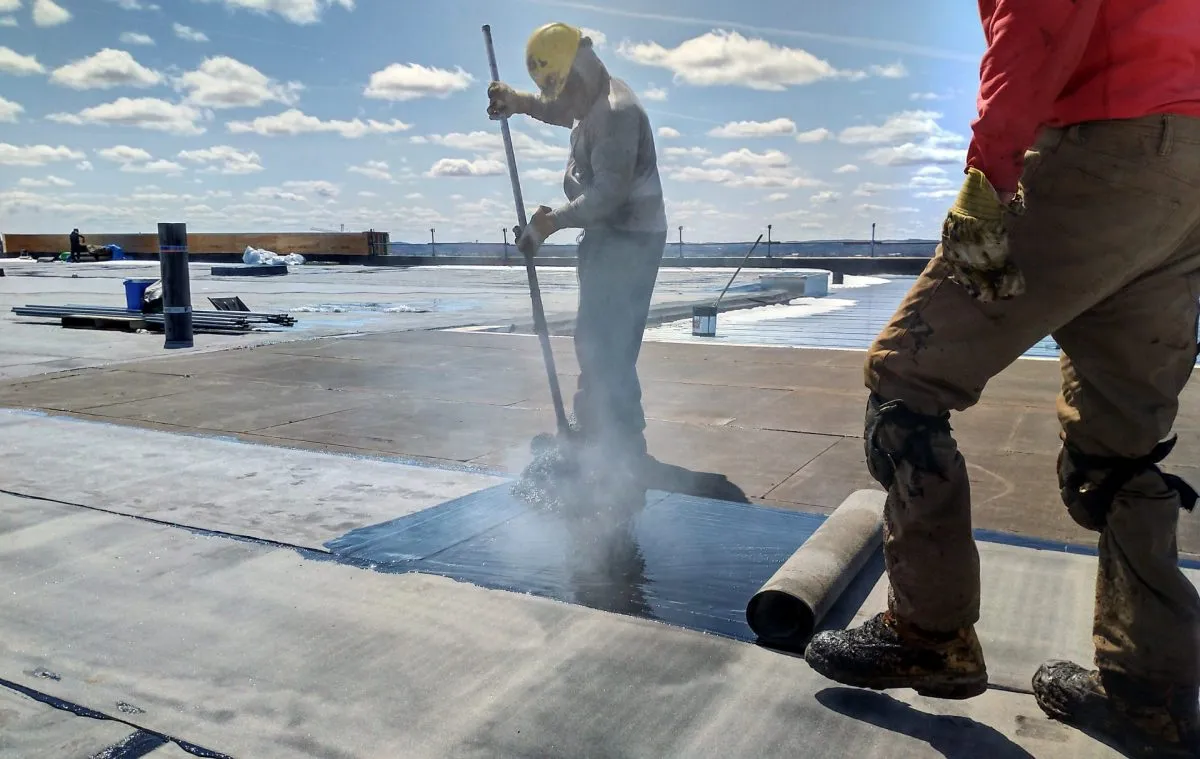
The Detroit metro has a specific challenge with older warehouse buildings in the Wayne County and Macomb County industrial submarkets — many were built in the 1960s through 1980s with coal-tar pitch or built-up roofing systems that have reached the end of their service life and now require full tear-off and disposal. Coal-tar pitch removal on a large Detroit warehouse requires specialized contractor handling and disposal documentation under Michigan DEQ regulations, and the tear-off cost premium for coal-tar systems is meaningful — owners should budget $1.50 to $3.00 per square foot above standard BUR tear-off costs when dealing with coal-tar systems on older Romulus, Dearborn, or Wyandotte industrial properties.
Cost per square foot for full warehouse roof replacement in the Detroit metro runs between $8 and $13 for standard single-ply systems with insulation, with older buildings requiring coal-tar tear-off running at the higher end plus the disposal premium. Detroit's competitive commercial roofing market includes several regional contractors with strong manufacturer certifications and verifiable large-building references, and competitive bidding on projects above 100,000 square feet generally produces fair market pricing. Spring and fall are the most competitive bidding windows; winter installations are technically feasible in Michigan with properly managed cold-weather installation protocols but add cost and risk relative to temperate-season work.
Asset management planning for Detroit warehouse roofs should incorporate the Michigan-specific issue of ice dam formation at parapet walls and drain leaders. When insulation is insufficient or air leakage from conditioned interior space warms the roof deck, snowmelt generated by the warm deck refreezes at the cold perimeter and creates ice dams that back water under membrane perimeter details. A thermal imaging inspection during a cold snap will identify areas of roof heat loss that are producing ice dam conditions, and the remediation — typically adding insulation and improving air sealing at the perimeter — prevents a recurring problem rather than just treating the symptoms of each individual ice dam event.
Roof-area photos, access notes, leak points, rooftop equipment conditions, and visible membrane details.
Drainage, seams, curbs, penetrations, edge metal, winter exposure, repair limits, and replacement triggers.
A practical split between emergency work, repair, maintenance, coating, recover, and replacement planning.